
Leave Your Message
Precision-engineered stabilizer systems designed for diverse beverage applications — from plant-based proteins to acidic dairy and fruit-vegetable juice blends.
A fruit juice stabilizer is a sophisticated compound system — typically combining hydrocolloids, emulsifiers, and pH-buffering agents — specifically formulated to maintain the sensory integrity of fruit-based beverages throughout production, distribution, and shelf life. Without stabilization, fruit juices are prone to phase separation, pulp sedimentation, color degradation, and volatile aroma loss, all of which directly compromise consumer perception of quality.
In the modern beverage industry, flavor enhancement is no longer a secondary concern. Consumers demand beverages that taste as fresh as the moment they were pressed, even after months on a refrigerated shelf or a long-distance shipping journey. This is precisely where advanced fruit juice stabilizer technology becomes indispensable.
Modern fruit juice stabilizers work through multiple synergistic mechanisms. Hydrocolloids such as pectin, xanthan gum, and carrageenan create a three-dimensional network that suspends flavor-carrying particles uniformly, preventing the separation that leads to "flat" or uneven taste. Emulsifiers ensure that fat-soluble aroma compounds remain evenly distributed throughout the aqueous phase, delivering consistent flavor in every sip.
Furthermore, advanced stabilizer formulations act as flavor encapsulants, slowing the oxidation of sensitive aromatic compounds like terpenes and esters that give citrus, tropical, and berry juices their characteristic brightness. The result is a beverage that retains its vibrant, multi-dimensional flavor profile far longer than unstabilized counterparts.
Beyond preservation, certain stabilizer ingredients actively contribute to flavor perception by modifying mouthfeel — creating the viscosity and body that the human palate associates with "richness" and "freshness," even in low-sugar or reduced-calorie formulations.
The global beverage stabilizer market is experiencing rapid transformation, driven by evolving consumer preferences, technological innovation, and the explosive growth of functional and health-oriented drinks.
The global food stabilizer market was valued at approximately USD 8.5 billion in 2023 and is projected to reach USD 12.8 billion by 2030, growing at a CAGR of around 6.1%. Within this, the beverage stabilizer segment — particularly for fruit juice applications — represents one of the fastest-growing subcategories, fueled by the USD 180+ billion global juice and juice-drink market.
Asia-Pacific leads this growth trajectory, with China, India, and Southeast Asian markets driving unprecedented demand for both traditional fruit juice products and innovative hybrid beverages that blend juice with dairy, plant proteins, or functional ingredients. This regional surge has positioned manufacturers like Tellcan Food at the forefront of stabilizer innovation tailored to Asian taste profiles and local raw material ecosystems.
In mature Western markets, the trend is toward clean-label stabilizer systems — formulations that deliver full technical performance using ingredients that consumers recognize and trust. This has accelerated R&D investment in natural hydrocolloids and bio-based emulsifiers as alternatives to synthetic additives.
From an industrial standpoint, the integration of fruit juice stabilizers into large-scale beverage manufacturing presents both opportunities and technical challenges. High-throughput production lines operating at speeds of 20,000 to 60,000 bottles per hour demand stabilizer systems that hydrate rapidly, disperse uniformly, and perform consistently across batch-to-batch variations in raw juice quality.
Temperature resilience is another critical industrial requirement. Fruit juice stabilizers must maintain their functional properties across hot-fill processes (typically 85–95°C), aseptic cold-fill operations, and high-pressure processing (HPP) — each of which exerts different physical stresses on the stabilizer network. Leading manufacturers now offer application-specific stabilizer systems optimized for each processing technology.
Consumer demand for transparent ingredient lists is driving a fundamental reformulation wave. Next-generation stabilizers leverage naturally derived hydrocolloids — citrus pectin, acacia gum, locust bean gum — to replace synthetic alternatives without compromising functional performance or flavor delivery.
Biotechnology is enabling the production of novel hydrocolloids and emulsifiers through precision fermentation, offering unprecedented consistency, functionality, and sustainability credentials. These bio-identical ingredients are set to redefine stabilizer performance benchmarks in the coming decade.
Machine learning algorithms are increasingly being applied to stabilizer R&D, enabling rapid screening of hydrocolloid combinations, predictive modeling of texture and flavor outcomes, and accelerated development timelines. This AI-augmented approach is compressing formulation cycles from months to weeks.
The convergence of stabilizer technology with functional ingredient delivery systems is creating new product categories. Stabilizers now serve as carriers for probiotics, vitamins, botanical extracts, and bioactive compounds, enabling fruit juice beverages to deliver health benefits without compromising sensory quality.
Leading stabilizer manufacturers are adopting circular economy principles — sourcing hydrocolloids from fruit processing byproducts (citrus peel pectin, apple pomace), reducing water consumption in extraction processes, and developing biodegradable packaging solutions that complement clean-label product strategies.
One-size-fits-all stabilizer formulations are giving way to regionally customized systems that account for local water chemistry, raw juice variability, climate conditions during distribution, and regional consumer taste preferences — delivering superior performance in every market context.
From NFC juices to complex multi-component functional drinks, fruit juice stabilizers play a pivotal role across a diverse spectrum of beverage applications.
Premium NFC and cold-pressed juices command a significant price premium, but their minimal processing makes them highly susceptible to rapid quality degradation. Specialized low-dose stabilizer systems using citrus pectin and ascorbic acid-based antioxidant complexes extend shelf life while preserving the fresh-squeezed flavor profile that defines this premium segment.
Blending fruit juices with vegetable components (carrot, beet, spinach, cucumber) creates complex emulsion systems with divergent pH values, particle sizes, and density profiles. Compound stabilizer systems incorporating xanthan gum, modified starch, and natural emulsifiers are essential to achieving the uniform color, consistent viscosity, and integrated flavor that consumers expect from these health-forward products.
The intersection of fruit juice and dairy — yogurt smoothies, kefir blends, milk-based fruit drinks — represents one of the most technically demanding stabilization challenges. The acidic pH of fruit juice can cause casein precipitation in dairy systems. Advanced acidic dairy beverage stabilizer systems using pectin-protein interaction chemistry prevent protein flocculation while enhancing the perceived fruitiness and creaminess simultaneously.
The explosive growth of plant-based diets has created enormous demand for fruit beverages fortified with pea protein, oat beta-glucan, or almond-based ingredients. These plant proteins present unique stabilization challenges due to their tendency toward aggregation and off-flavor generation. Specialized plant-based protein beverage stabilizer systems are engineered to mask leguminous or cereal off-notes while amplifying the bright fruit flavors that make these products appealing.
Electrolyte-enriched fruit beverages and energy drinks incorporating B-vitamins, caffeine, or adaptogenic herbs require stabilizer systems that remain functional across high-mineral ionic environments. Specialized stabilizer blends maintain clarity, prevent mineral precipitation, and ensure that added functional ingredients do not interfere with the clean, refreshing fruit flavor profile that drives repeat purchase in this high-growth category.
Frozen juice concentrates, ice pops, and slush beverages undergo dramatic physical changes during freezing and thawing cycles that can destroy emulsion stability and cause irreversible flavor compound loss. Cryoprotective stabilizer systems incorporating specific molecular weight hydrocolloids form protective matrices around flavor compounds, maintaining sensory quality through multiple freeze-thaw cycles.
Comprehensive evaluation of hydrocolloid sources, emulsifier grades, and functional additive candidates against flavor compatibility and regulatory compliance criteria.
AI-assisted combination optimization across hundreds of candidate formulations, with predictive modeling of texture, stability, and flavor interaction outcomes.
Rigorous pilot-scale production trials replicating client processing conditions — hot fill, aseptic, HPP — with accelerated shelf-life testing and sensory panel evaluation.
Client-specific fine-tuning of dosage, hydration protocols, and blending sequences, followed by industrial-scale production validation at Tellcan's 4,000+ metric ton annual capacity facility.

Nanchang Tellcan Food Science Co., Ltd (hereinafter referred to as Tellcan Food), founded in 2001, is an excellent practitioner of compound food additives and food essence, specializing in the research and development, production and sales of food additives, and the research and development of food technology and food technology.
Various types of compound food additives, edible essence and spices produced by Tellcan Food can be used in many fields such as food, beverage and dairy products. With over two decades of deep industry expertise, Tellcan has become a trusted partner for thousands of beverage manufacturers seeking reliable, innovative fruit juice stabilizer solutions that deliver measurable flavor enhancement and product stability.
Read More About UsOur 5+ dedicated research and development centers are where fruit juice stabilizer breakthroughs are born — combining analytical chemistry, sensory science, and process engineering expertise.


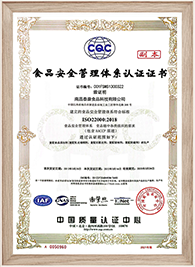
The company has implemented and maintains the HACCP 22000 Food Safety Management System, ensuring reliable products and services. To date, Tellcan has resolved technical challenges for thousands of domestic enterprises and earned prestigious recognitions.
 Council Member of China Food Additives Production and Application Industry AssociationStanding Council Member of Jiangxi Food Additives AssociationMember of China Dairy Products Industry AssociationMember of China Bakery & Confectionery Supplementary Materials Industry AssociationMember of China National Federation of Industry & Commerce Bakery AssociationPremium Products & Global Sourcing



Explore Tellcan's comprehensive range of stabilizer systems engineered for every beverage category — from fruit juice flavor enhancement to dairy, plant-based, and confectionery applications.
Partner with Tellcan Food Science to access cutting-edge fruit juice stabilizer systems that deliver superior flavor enhancement, extended shelf life, and consistent quality at industrial scale.
Contact Our Experts Today


