Leave Your Message
The global beverage industry is currently undergoing a massive paradigm shift. As modern consumers become increasingly health-conscious, there is a distinct transition away from artificially flavored, high-sugar carbonated drinks toward natural, nutrient-dense, plant-based alternatives. Among these, Fruit and Vegetable Juice Beverages have emerged as a dominant category. Consumers are actively seeking beverages that not only quench thirst but also provide essential vitamins, minerals, antioxidants, and dietary fiber. However, the production of high-quality, pulpy, and natural juices presents significant technical challenges for manufacturers. Issues such as pulp sedimentation, phase separation, flavor degradation over time, and the negative impacts of thermal processing (like UHT or pasteurization) are constant hurdles. This is precisely where Microcrystalline Cellulose Powder For Fruit And Vegetable Juice Beverages proves to be an indispensable, revolutionary ingredient.
Microcrystalline Cellulose (MCC) is a naturally occurring, highly purified, and partially depolymerized cellulose synthesized from specialized plant fibers. Recognized globally as a GRAS (Generally Recognized As Safe) food additive, MCC acts as a multi-functional stabilizer, thickener, and texturizer. When applied to fruit and vegetable juices, it fundamentally alters the rheological properties of the liquid, creating a robust, invisible three-dimensional network that defies gravity and prevents insoluble particles from settling. This ensures that a bottle of mixed vegetable smoothie or citrus nectar looks just as appetizing on the supermarket shelf after six months as it did on the day it was bottled.
The commercial demand for Microcrystalline Cellulose in the food and beverage sector has seen an unprecedented surge. Market research indicates that the global juice market is valued at over $140 billion, with the cloudy and pulpy juice segment experiencing the highest Compound Annual Growth Rate (CAGR). In the past, manufacturers relied heavily on traditional hydrocolloids like xanthan gum, pectin, or guar gum. While effective to a degree, these gums often impart a "slimy" or artificially thick mouthfeel that modern consumers reject. MCC, conversely, provides unparalleled stability without compromising the clean, refreshing mouthfeel expected from a premium juice.
Industrially, the integration of MCC into juice production lines requires precise formulation. Beverage engineers leverage MCC's unique thixotropic properties—meaning the beverage becomes fluid and easy to pump or drink when subjected to shear stress (like shaking or swallowing), but immediately rebuilds its stabilizing network when at rest. This property is crucial for industrial-scale filling operations, allowing for high-speed bottling without foaming or clogging, while ensuring long-term shelf stability. Furthermore, as the supply chain for raw materials becomes more sophisticated, leading manufacturers like Tellcan Science are producing highly specialized, ultra-fine MCC powders specifically tailored for the low-pH environments typical of fruit juices.
In juices containing high amounts of insoluble solids—such as tomato juice, carrot blends, or freshly squeezed orange juice with pulp—gravity is the enemy. Without stabilization, heavy particles sink to the bottom, while clear serum rises to the top, creating an unappealing "separated" look. Microcrystalline Cellulose powder forms an insoluble, micro-reticulated network that physically traps these particles. Unlike soluble gums that thicken the water phase, MCC provides yield stress, holding pulp, fruit bits, and even fortified minerals (like calcium) in uniform suspension indefinitely, enhancing visual appeal and consumer trust.
With the rise of the "sugar-reduction" and "low-calorie" trends, juice manufacturers are diluting natural sugars or blending juices with water and non-nutritive sweeteners. However, this often results in a watery, thin, and unsatisfying texture. MCC acts as a fat-mimetic and texture enhancer. The microscopic cellulose particles roll over the tongue, simulating the creamy, rich mouthfeel of natural fruit purees or dairy fats, but contributing zero calories. This makes MCC an ideal component for diet green smoothies, detox vegetable juices, and light fruit nectars.
Fruit juices are inherently acidic, typically ranging from pH 3.0 to 4.5. Many traditional stabilizers degrade or lose their viscosity in highly acidic environments, especially when subjected to high heat during Ultra-High Temperature (UHT) processing or pasteurization. Microcrystalline Cellulose powder is chemically inert. It does not hydrolyze under low pH conditions and maintains its structural integrity through severe thermal shocks. This ensures that the juice's texture and stability remain consistent from the processing plant to the consumer's refrigerator.
Beyond its physical properties, MCC is functionally an insoluble dietary fiber. When added to fruit and vegetable juice beverages, it not only stabilizes the drink but also subtly boosts its fiber content, promoting digestive health. In an era where "Clean Label" is paramount, MCC is perceived as a natural, plant-derived ingredient. It allows formulators to reduce the reliance on synthetic emulsifiers or complex chemical stabilizers, aligning perfectly with the organic and natural product positioning desired by premium beverage brands.
The future of Microcrystalline Cellulose Powder for Fruit and Vegetable Juice Beverages is deeply intertwined with technological advancements and AI-driven food science. We are witnessing the dawn of Predictive Rheology Modeling, where Artificial Intelligence is used to simulate how different grades of MCC interact with complex juice matrices containing varying levels of natural pectins, acids, and sugars. AI algorithms can now predict the exact dosage of MCC required to achieve a specific shelf-life under diverse climatic conditions, drastically reducing the R&D cycle time for new beverage launches.
Another profound trend is the development of Nano-Fibrillated Cellulose (NFC) and ultra-colloidal MCC grades. These next-generation powders offer exponentially higher surface areas, meaning beverage manufacturers can achieve superior stabilization at much lower dosages, further preserving the authentic flavor release of delicate fruits like berries or tropical melons. Additionally, sustainability is reshaping the production of MCC. Industry leaders are increasingly sourcing raw cellulose from upcycled agricultural by-products, creating a circular economy that reduces the carbon footprint of the entire beverage supply chain.
As the boundary between functional foods and beverages continues to blur, we will see juices fortified with probiotics, omega-3 fatty acids, and botanical extracts. Stabilizing these complex, multi-phase systems will require the advanced, synergistic capabilities of Microcrystalline Cellulose. By acting as the structural backbone of these innovative beverages, MCC is not just an additive; it is the critical enabler of the next generation of healthy, functional, and visually stunning fruit and vegetable juices.
Nanchang Tellcan food Science Co., Ltd (hereinafter referred to as Tellcan Food), founded in 2001, is an excellent practitioner of compound food additives and food essence, specializing in the research and development, production and sales of food additives, and the research and development of food technology and food technology. Various types of compound food additives, edible essence and spices produced by Tellcan Food can be used in many fields such as food, beverage and dairy products.
Read more


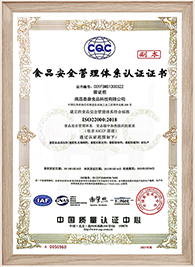
The company has implemented and maintains the HACCP 22000 Food Safety Management System, ensuring reliable products and services. To date, Tellcan has resolved technical challenges for thousands of domestic enterprises and earned prestigious recognitions, including:
 Council Member of China Food Additives Production and Application Industry Association Standing Council Member of Jiangxi Food Additives Association Member of China Dairy Products Industry Association Member of China Bakery & Confectionery Supplementary Materials Industry Association Member of China National Federation of Industry & Commerce Bakery Association Premium Products & Global Sourcing