
Leave Your Message
In the highly competitive landscape of modern food manufacturing, the creation of flawless jelly and pudding products relies heavily on advanced rheological control. A Neutral Compound Emulsifying Thickener is not merely a single ingredient, but a sophisticated, scientifically engineered matrix of hydrocolloids, emulsifiers, and stabilizing agents. These compounds are designed specifically to operate effectively within neutral pH environments (typically ranging from pH 6.5 to 7.2), which is the standard baseline for dairy-based puddings, plant-based flans, and ambient-stable jelly desserts. The primary objective of these thickeners is to manipulate the microstructural network of the water and lipid phases within the product, ensuring a homogeneous, thermodynamically stable system that can withstand the rigors of processing, thermal treatment (such as UHT or pasteurization), and extended shelf life.
One of the most persistent and commercially damaging issues in the production of jellies and puddings is syneresis—the weeping or expulsion of liquid from the gel matrix over time. This phenomenon not only degrades the visual appeal of the product but drastically alters the mouthfeel, leading to consumer rejection. By utilizing a high-quality neutral compound emulsifying thickener, manufacturers can establish a robust, three-dimensional polymeric network. The synergistic interaction between specific gums (such as carrageenan, locust bean gum, and xanthan) and emulsifiers (like mono- and diglycerides of fatty acids) creates a highly functional water-binding capacity. The emulsifiers reduce the interfacial tension between the fat droplets and the aqueous phase, preventing fat coalescence and creaming, while the thickeners immobilize the free water. The result is a pudding with a luxuriously smooth, creamy texture, and a jelly with a brilliant, elastic, and clean-cutting bite that remains perfectly stable from the factory floor to the consumer's spoon.
The global market for texturants and stabilizers is experiencing unprecedented growth, driven by shifting consumer paradigms and the rapid expansion of the convenience food sector in emerging markets. Currently, the industrial status of neutral compound emulsifying thickeners is characterized by a demand for multi-functional efficiency. Food manufacturers are no longer looking for single-purpose thickeners; they require comprehensive "stabilizer systems" that streamline inventory, reduce batching errors, and optimize the supply chain. In the context of jelly and pudding production, utilizing a pre-formulated compound thickener reduces the need to source, store, and measure half a dozen different raw hydrocolloids. This consolidation translates to significant economic advantages: reduced warehousing costs, minimized production downtime, and unparalleled batch-to-batch consistency.
Furthermore, the volatility in global raw material supply chains—particularly concerning agricultural hydrocolloids affected by climate change—has pushed leading R&D centers to develop highly optimized compound formulas. These advanced neutral compound emulsifying thickeners are engineered to maximize functionality at lower dosage levels (often below 0.5% of the total formulation). By achieving superior gelation and emulsification at these micro-dosages, manufacturers can protect their profit margins without compromising the premium sensory attributes of their jelly and pudding portfolios.
The evolution of packaging technology, specifically the rise of spouted pouches, has birthed a massive sub-category: drinkable jellies and squeezable puddings. These products present a unique rheological challenge. The gel must be firm enough to maintain suspension of particulates (like nata de coco or fruit bits) and prevent phase separation during months of ambient storage, yet possess a highly specific shear-thinning property. When the consumer squeezes the pouch or applies suction, the gel structure must yield predictably, transforming into a smooth, easily consumable fluid, and then instantly recover its viscosity to prevent a watery mouthfeel. A precisely calibrated neutral compound emulsifying thickener is the only way to achieve this delicate thixotropic behavior. The emulsifying component ensures that any added dairy or plant fats remain perfectly homogenized, preventing the dreaded "fat plug" at the spout, while the thickener dictates the exact yield stress required for consumption.
Premium dessert categories frequently feature multi-layered puddings and jellies—for example, a rich chocolate pudding base topped with a translucent mint jelly, or a panna cotta layered with fruit coulis. In these complex systems, osmotic pressure and moisture migration threaten to blur the distinct layers, leading to color bleeding and flavor muddying over the shelf life. The application of a specialized neutral compound emulsifying thickener in each layer acts as a structural barrier. By tightly binding the free water within its specific matrix, the thickener drastically reduces the mobility of water-soluble colorants and flavor compounds. This ensures that a multi-layered pudding maintains its pristine, high-end visual aesthetic and distinct flavor profile for weeks on the supermarket shelf, directly driving consumer premiumization and brand loyalty.
As the plant-based movement accelerates, formulating vegan puddings using oat, almond, soy, or coconut milk has become a top priority for global brands. However, plant proteins behave fundamentally differently than casein and whey found in traditional dairy. They often lack the natural emulsifying properties and can result in chalky, thin, or easily separated desserts. Here, the neutral compound emulsifying thickener is indispensable. It compensates for the lack of dairy fat by creating a rich, creamy mouthfeel that mimics milk fat globule structures. It stabilizes the plant proteins, preventing them from precipitating out of solution, and builds a robust gel network that delivers the indulgent, melt-in-the-mouth experience consumers expect from a traditional pudding, without the use of animal-derived gelatin.

Nanchang Tellcan food Science Co., Ltd (hereinafter referred to as Tellcan Food), founded in 2001, is an excellent practitioner of compound food additives and food essence, specializing in the research and development, production and sales of food additives, and the research and development of food technology and food technology. Various types of compound food additives, edible essence and spices produced by Tellcan Food can be used in many fields such as food, beverage and dairy products, with a profound expertise in formulating high-grade Neutral Compound Emulsifying Thickeners for Jelly and Pudding products.
Read more about our technologyOur state-of-the-art laboratories are equipped with advanced texture analyzers, rheometers, and pilot-scale UHT processing units, allowing us to simulate real-world pudding and jelly manufacturing conditions. This ensures our neutral compound emulsifying thickeners perform flawlessly before they reach your factory.


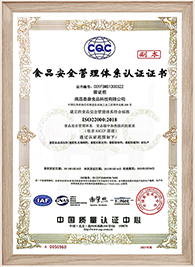
The company has implemented and maintains the HACCP 22000 Food Safety Management System, ensuring reliable products and services. To date, Tellcan has resolved technical challenges for thousands of domestic enterprises and earned prestigious recognitions, including:
 Council Member of China Food Additives Production and Application Industry Association Standing Council Member of Jiangxi Food Additives Association Member of China Dairy Products Industry Association Member of China Bakery & Confectionery Supplementary Materials Industry Association Member of China National Federation of Industry & Commerce Bakery Association Premium Products & Global Sourcing




Looking forward, the development of neutral compound emulsifying thickeners for jelly and pudding products is entering a high-tech era. The integration of Artificial Intelligence (AI) and machine learning algorithms in food science is revolutionizing how we approach formulation. By analyzing vast datasets of rheological profiles, molecular interactions, and consumer sensory feedback, AI can predict the exact combination of hydrocolloids and emulsifiers needed to achieve a specific texture profile with unprecedented accuracy. This means faster R&D cycles, highly customized thickener solutions for niche pudding markets (such as keto-friendly or high-protein variants), and the ability to dynamically adjust formulas based on raw material variability.
Additionally, the push towards sustainability and precision fermentation will likely yield new, bio-identical functional ingredients that can be incorporated into these compound systems. Smart additives that respond to specific triggers—such as temperature changes in the mouth or enzymatic action during digestion—will allow for interactive jelly and pudding experiences, delivering flavors and nutritional compounds in highly controlled release patterns. Tellcan Science is at the forefront of this technological curve, continuously upgrading our manufacturing capabilities to deliver the next generation of intelligent emulsifying and thickening solutions to the global food industry.
Collaborating with Global Food Industry Leaders


